What we do
Research
Our mission
To identify fundamental biological principles relating to flight, advancing our understanding of animal flight while adapting relevant principles into enhanced engineered systems.
Our guiding framework
Bio-informed design embeds scientifically supported biological principles into the engineering design process.
Not every design needs to be bio-informed, some designs benefit from inspiration that is analogous to biology. Being clear in the work's presentation matters more to us than an exact label, so for every project we report these three attributes.
Source of inspiration
Explicit identification of the species or family from which an idea originates.

Level of mimicry
How closely biology is mimicked: abstracted, analogy, or direct mimicry.

Strength of evidence
How much and what type of biological evidence supports the implemented design.

Our core values

Multidisciplinary by design
Integrating multiple backgrounds and perspectives gives a more holistic picture of science. We collaborate across disciplines and bring varied tools and approaches into our work.

Honest about bias
Science and engineering are not purely objective. We work to recognize our own biases so that we advance and communicate science accurately, transparently, and ethically.

Rigorous about uncertainty
Life and science are uncertain. We quantify or estimate the uncertainty on every experimental, numerical, and analytical method we use.
What we study
Three connected research areas bridge biology, aerospace, and robotics.

Morphology & Kinematics
We study and quantify how wings, tails, feathers, and joints move during flight to discover biological principles that affect aerial locomotion.
Why it mattersYou cannot transfer a principle to an aircraft until you have measured what birds actually do, within quantified uncertainty.

Mechanics & Dynamics
We investigate how birds adjust aerodynamic and inertial forces and moments to achieve maneuvers across the full spectrum of flight.
Why it mattersFlight dynamics balances forces, moments and accelerations. By determining how birds adjust their flight we may identify effective methods to design morphing aircraft.

Sensing & Control
We study how animals sense and control flight, asking if an engineered sensory world can encapsulate biological capabilities.
Why it mattersThe same principles that allow birds to adapt to natural conditions may allow future aircraft to autonomously adapt in flight.
Active projects
A snapshot of current member-led projects, grouped by the lab's main themes above.
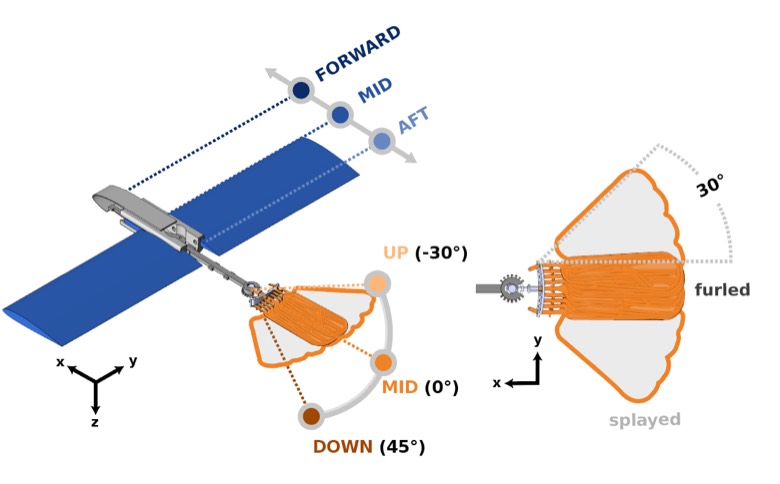
Bird-informed morphing tail flight dynamics & control
How an actively morphing tail reshapes the flight dynamics and control authority of a bird-inspired aircraft.
PaperLongitudinal Linear Parameter Varying System Modeling and Analysis of an Avian-Inspired Tail Morphing UAV (2026)
Led by Kaleb Bordner
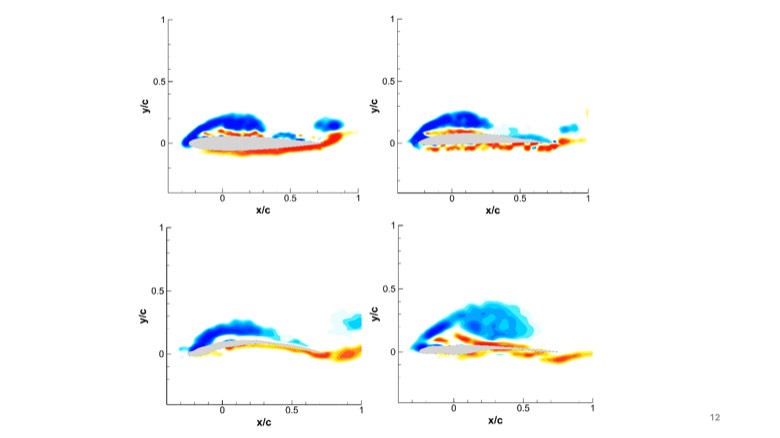
Aerodynamics of bird perching
Experimental study of the unsteady aerodynamics and dynamic stall a wing experiences during a perching maneuver.
PaperExperimental Study of Dynamic Stall of Porous Avian-Inspired Airfoils (2026)
Led by Francisco Jackson
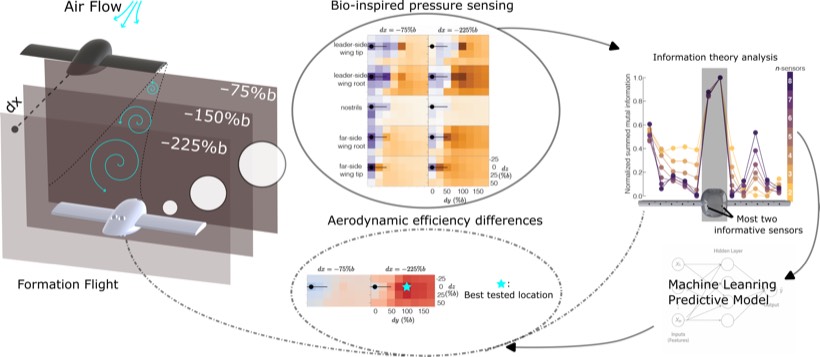
Nares-inspired pressure sensing for formation flight
Distributed pressure sensing that lets an aircraft perceive the aerodynamic benefit of flying in another's wake, the way birds do in a formation.
PaperDistributed Pressure Sensing for Analyzing Aerodynamic Characteristics in Avian-Like Formation Flight (2025)
Led by Huanglun (Adam) Zhu
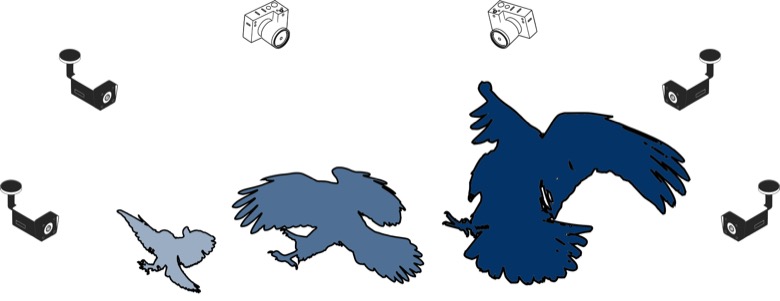
Raptor perching behavior
Quantifying how raptors orchestrate wing and tail motion through the final moments of a perch, with the California Raptor Center.
Led by Dr. Alfonso Martínez-Carmena
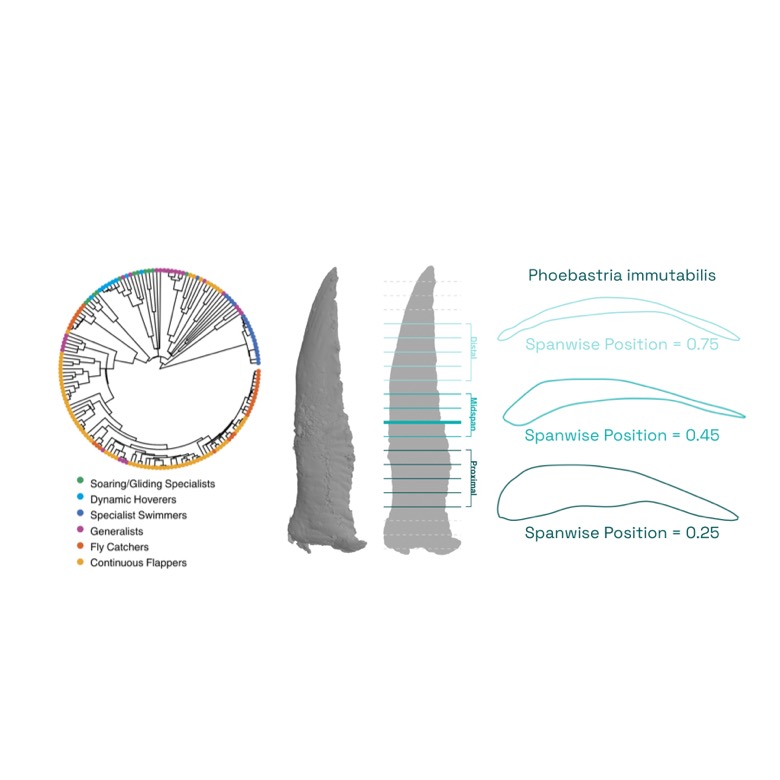
Avian airfoil geometry
Characterizing the cross-sectional shapes of real bird wings and what they mean for lift, drag, and stability.
Led by Faiza Alvi
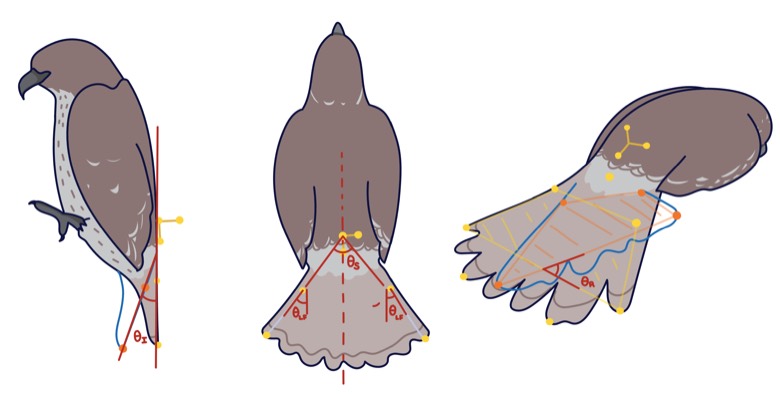
Range-of-motion quantification
Measuring the joint range of motion available to birds and bird-inspired wings, defining the envelope within which morphing control can act.
Led by Alex Fillman
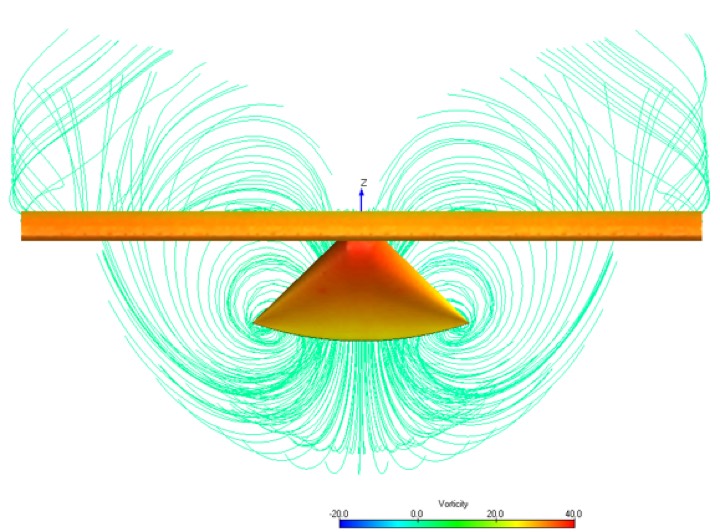
Morphing aerodynamics
How continuous wing reconfiguration changes aerodynamic performance across flight conditions.
Led by Cooper Cook
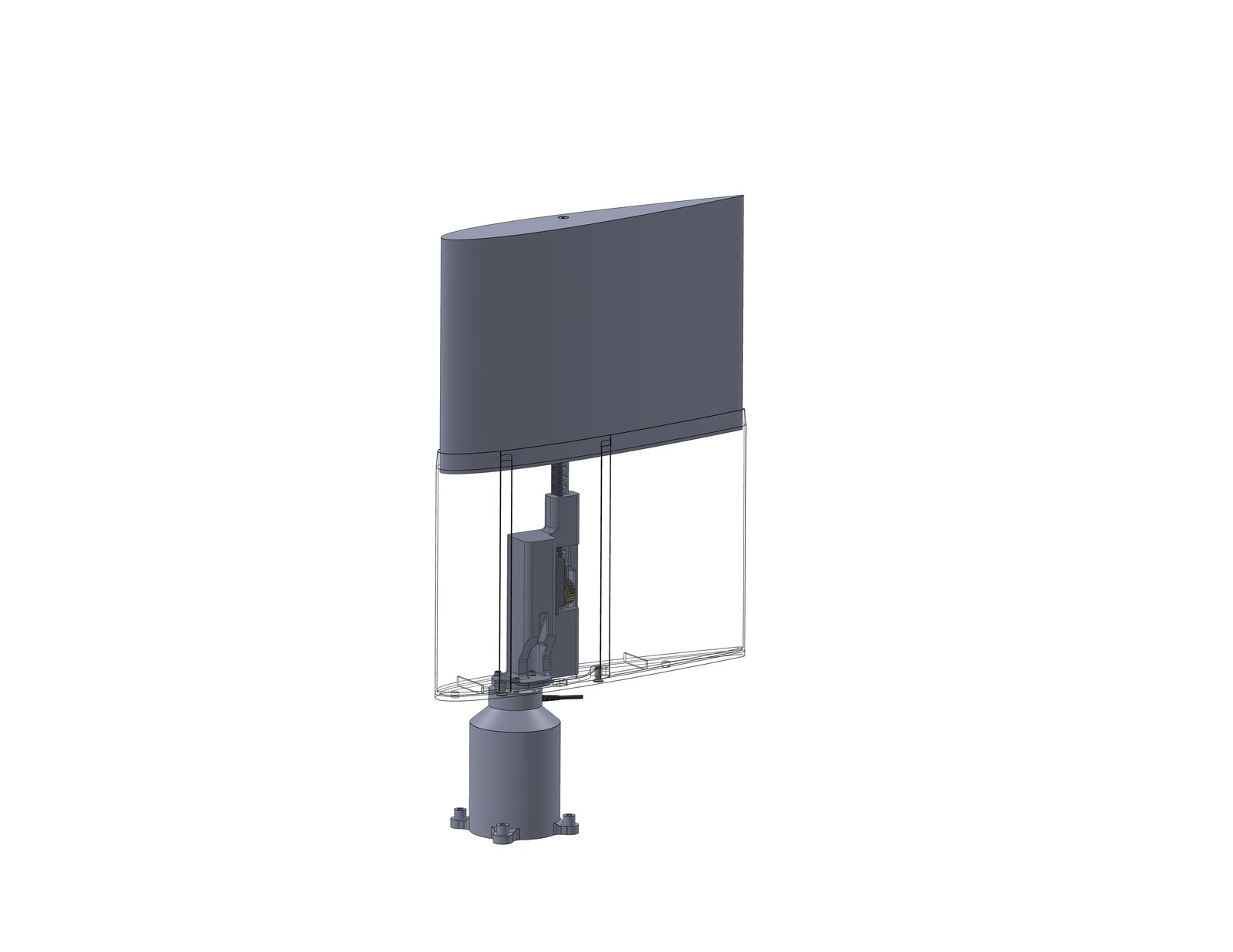
Maneuverability & agility in morphing-wing dynamics
Connecting morphing-wing dynamics to the maneuverability and agility metrics that matter for real flight.
Led by Joshua Booth
Project figures are from lab members' own work or presentations; attribution should be given appropriately.